Monday, May 17, 2010

Procrastination


Oh how she temps me with naps and episodes i have already watched as she whispers “in fifteen minutes” into my ear and I relax as the sun starts to rise, and just like any tease I end up in bed, alone, unsatisfied and full of regret

Object

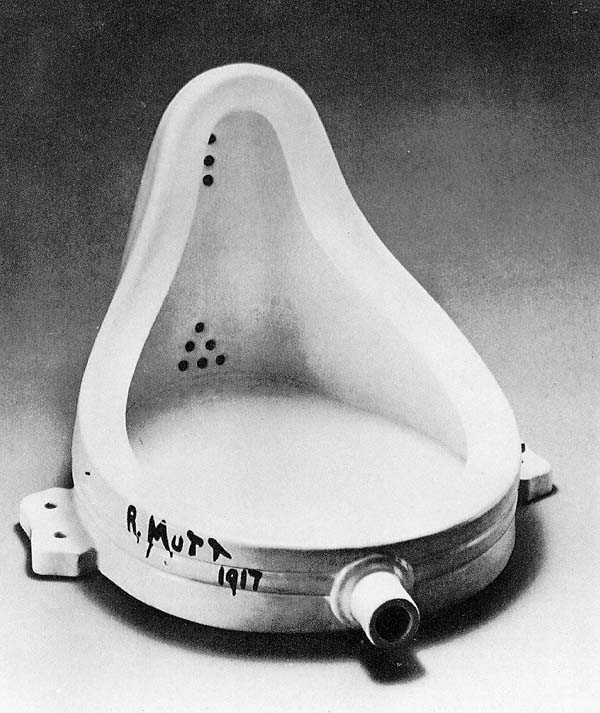
In our daily experiences we observe, interpret and construct meaning around objects. They may be as mundane as rocks or cars. An object may even manifest as a person, a situation or a feeling. It can be any ‘thing’ to which one attributes meaning and can desire or reject as abject. So here are a few facets to consider when considering the implications of the ‘object’


It Is Subject To Personal Perspective

· Its discursive position

· Cultural interpretation

· Relation to concept of abject

· Place in personal narrative

· Value to personal construct

o Validate

o Strengthen

o Negate

o Oppose

· Ornamental attributes

o Contribution to aesthetics

o Economic implications

o Peer appraisal

o Correlation to personal construct of value

Negotiating Implication of Value

· What fears of possible attributes will it negate

· What constructs of self will be validated or dismissed if the object is not attained/ avoided

· What actions/choices/sacrifices are needed to attain the object

o Weight of attempt VS degree of possible gain

· Which desire(s) does it relate to

· Who in one’s life is affected by the object

o Degree of affect and value of individual are to be noted

· To whom and to what degree is it valued

· What has been express by other regarding the object

· What cultural/sub-cultural implications does the object have

· Has this object, or a simular one, already been in one’s possession

o If so:

§ For how long

§ Why did one loose possession

§ How did one attain it

§ What was the initial motivation for attaining it

§ How did it affect one’s life/relations/perspective/behaviour

Possible Reasons for Perceiving It As Abject

· Cultural norms/morays/taboos

· Cost too great, therefore reject instead of experiencing loss

· Associated with dystopic elements of self

· Fear of confronting its unattainability

· Tied to negative schema/ invokes a negative construct

o Linked to traumatic experience

o Discursive constitution of self/object results in tension/anxiety

Thursday, May 13, 2010

Sandbox


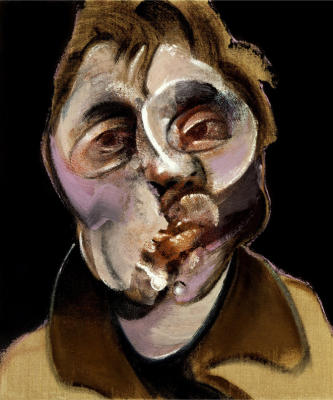
You may not know this, but I can see the flickering reflections that dance behind your eyes. I know them because you and I play together. We sit in the same sand box. We have the same toys. They were lonely till we found them beside the refuse. We saw the same beauty in their stains and fractured frames. Together they dance in our hands. We share each other’s stories as though we too could be the hero. They skate between bedtime tales and accounts of horror’s agony. They are not puzzle pieces searching for solitary safety, but tainted cloth torn from the same painting. Their colours run and fade between them, blurring their place in an inconsistent image. We compare scars. Together we revel in the blood we have shed, whilst watering the thorny bushes that are stained red from writhing. We laugh at the parts we’ve clothed and cringe and the garbs of others. In this sand box we do not build castles or dig holes. In the sand we right stories in a language we cannot speak and draw images we have never seen, only to have them lost to the wind. You may not see this behind the cataracts, but I have not played with one of you before. As with the others, even with all my toys in the sand, there remain some games we cannot play. But this is our box, our toys, our colours and scars, our parts and garbs, this is our sand. I will stay and play with you in our sand box, for despite all that I see in your depths, they are still only flickering reflections dancing behind your eyes.
An Aid to Constructing Self in Relation to the Other


Fluidity of perspective does not exist outside of external influence. An individual, as a member of a social body, feeding on positive regard, will construct and writhe within their personality in an effort to negotiate their identity with the expectations of others. This has been perpetuated an endorsed by certain social structures as it lubricates interactions and promotes focused productivity. Yet is results in certain inter and intra personal conflicts. This is especially pronounced in cultures that promote individuality and the importance it has been imbued with in disciplinary society. Now that we have a culture of individuals who struggle to negotiate the implications of their relatively new found fear of loss. A useful approach to cope with this by steadily gaining a better understanding of that which it one may lose. In other words, the thoughts and feelings one attributes to and uses to construct their sense of self. With an improved grasp of who a person is to themselves, the implications can be better explored. An uninformed expectation of others can be socially hazardous. Though understanding without communication is masturbation, as it feels good and has many personal rewards, it is incomplete. When one is able to convey an informed view of one’s ‘self’, expectations, boundaries and perceptions of others, it offers those with whom one relates a better basis upon which to plan social behaviour and the implications of their identity upon it. Without that we have little choice but to act blind and wonder why we’re bruised. Life, love, and identity are responsibilities. Work must be done to maintain them. If one does not, then they have no right to rage when they break

Monday, May 10, 2010

The Room


“Welcome” they said as I entered through the doorway. I would have laughed, but they were too well armed and my armour was in dire need of reconditioning. It took a few too many moments to find a place to sit. If you were to ask me then why I had arrived, I might have been able to compile a seemingly coherent justification. Upon reflection, the price I paid for avoiding memories seems steep in relation to my dreams. Though without them I doubt my dreams would contain the menagerie of colours it does today, were it not for the misappropriated hours of my life. That room was filled with all the means to delay my life. In all fairness I did gain the odd reinterpretation of events and a pair of new perspectives. But I was a child there. The strengths I had toiled for were beyond my capacity to recall. Though now the moments in which I can exhale into my skin the fires of certainty have become so much the sweeter. Reclining into myself, at piece, in power, lies the prologue to a dream that seemed so far from my moments. The room looks so much different now. I know were to sit. Still I knock before entering.

Wednesday, May 5, 2010

We Should Lie


The idyllic notion that truth should be revered is a shallow one. It does not consider the social ramifications our thoughts could have. Through our omissions and our concealing of emotional machinations we spare our beloved ones the barbs of our hearts and minds. Even the assumption that what we think and feel are true reflections of our being is dangerous. It implies that our souls are placid and the all things that enter and leave it do so without breaking its surface. Things seldom ripple us, but surge within our raging currents and breaking in the futile search for the shore. Upon such a turbulent surface one will seldom find a clear reflection. There are times when the waters are calmer than usual and the image it allows seems more consistent; but those are fleeting moments. How can one be expected to present a truth amidst the chaos of a new arrival? Strangely though, the more traumatic the experience and the more perplexing the resulting emotion, the more we are pressed to communicate a coherent comprehension. We cannot do so with honesty for it hardly exists yet for its bearer. So what is done is a social dance amidst introspective dressage. We take what we can and weight it up against the possible responses to a multitude of interpretations and select the one that suits the manner of its owner. We cannot be expected to open ourselves to others without reservation. Communicated truth is predominantly a staged presentation, scripted to induce the most favourable future, reduce harm and maintain one’s social station. When this process is not adhered to and our guard does not prevent the uncensored reflection of our tempestuous hearts from spilling out; we are deemed insensitive, uncaring or immature. We do not want the truth


So what is it that we base our lives on?
Tuesday, February 9, 2010

A High Res Goddess


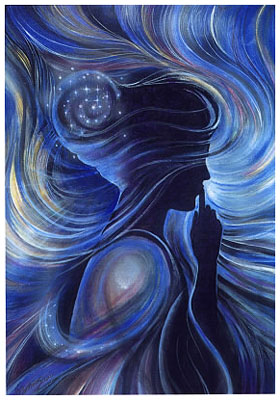
I just realized that if the internet were to have a religion, it would be porn, and once again women would be its goddesses. And this makes sense. We have shifted from goddess worship, to god worship, and have come full circle, once again focusing on big breasted and voluptuse women and famine, whilst creating multiple sub genres and cults that cater to the individual ideals of beauty and sexuality.

Before Zeus punched big old Coronus in the belly, forcing him to throw up his own incestuous brood, Gaea was the birth giver to the heavens. The very basis of our modern religious beliefs can be dated back to ancient astrological concepts which the Greeks attributed to as the child and mate of the great mother Gaea.
Women, I have always believed, were proficient at being worshiped and adorned, were as men have been highly skilled acolytes. Man, however is a hungry beast. Our temples were build bigger, our swords sharper and our armor harder. Now the power to build, destroy and write really cool sounding stories, seemed to pale in comparison to making babies (which might I remind you is a lot more impressive than we give it credit, unless you live in a trailer park). And so women sat in their sufficiently shorter chair at the dinner table for a few hundred years, with the odd bump here or there which aren’t as funny as what I’m about to talk about so I’ll write about it later.

Now, however, they have once again risen to the highest peak of worship since, well never really. The way you make a god is simple. First create a disenfranchised workforce (see the medieval surfs for historical bonus points). Then take something they what but cannot have, and show them what it looks like till they drools so hard they drown (see gothic cathedrals for even more historical bonus points). If you don’t think this is true, then turn to your nearest geek, preferably one his calluses on his palms, and look at his expression every time a beautiful, sparsely clad woman walks past. Oh he is thinking dirty things, very dirty, but he worships her. By her simply existing, he is humbled, and that’s the whole point of worship.

The problem is that while prostrating himself before her unattainable grandeur is two-fold. Firstly, the act of worship; this is done by masturbating to large amounts of porn. This has many effects which I will touch myself on later… okay I’ll run with that joke. The second problem is the measure by which women are worshiped. We do not love them for their compaction, there humorous ways or how they can comfort us even when our beryl man-shell cracks and we feel weak and vulnerable. No, we love them for the amount of beads they can fit in their ass, or the amounts of seamen they are prepared to swallow. Even though they are gods to some, women are not gods, they are people, and just like in any religion, they are getting fucked over by their high priests.